
HOMILY: Atonement
Understanding how God brings us back to Himself

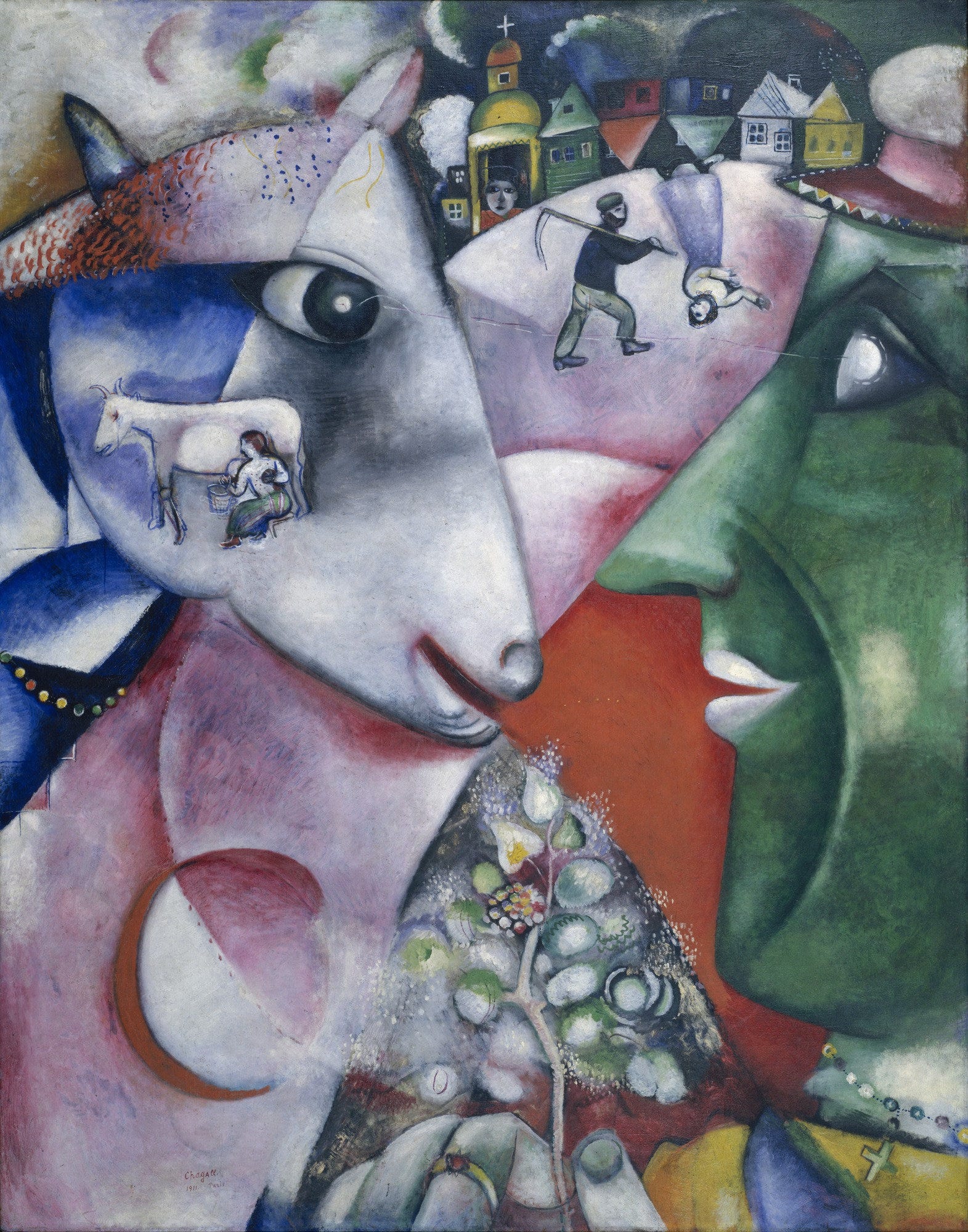
Saturday Night Vespers homily by Chad Davis, given on 2/22/25
Seed Thought:
“There is no doubt that sins cannot be carried like a burden, and taken off the shoulder of one being to be laid on that of another being. But these ceremonies are of a symbolic character, and serve to impress (humans) with a certain idea, and to induce them to repent; as if to say, we have freed ourselves of our previous deeds, have cast them behind our backs, and removed them from us as far as possible."
-Maimonides - Spanish Medieval Jewish philosopher (1135–1204)
Scripture:
Leviticus 16 (selections)
And he shall take the two he goats, and place them before the Lord at the entrance to the Tent of Meeting. And Aaron shall place lots upon the two he goats: one lot "For the Lord," and the other lot, "For Azazel." And Aaron shall bring the he goat upon which the lot, "For the Lord," came up, and designate it as a sin offering. And the he goat upon which the lot "For Azazel" came up, shall be placed while still alive, before the Lord, to [initiate] atonement upon it, and to send it away to Azazel, into the desert. … He shall then slaughter the he goat of the people's sin offering … And then he shall bring the live he goat. And Aaron shall lean both of his hands [forcefully] upon the live he goat's head and confess upon it all the willful transgressions of the children of Israel, all their rebellions, and all their unintentional sins, and he shall place them on the he goat's head, and send it off to the desert ... The he goat shall thus carry upon itself all their sins to a precipitous land, and he shall send off the he goat into the desert.
Mark 14:22 - 24
As they were eating, Yeshua took bread, and when he had blessed, he broke it, and gave to them, and said, "Take, eat. This is my body."
He took the cup, and when he had given thanks, he gave to them. They all drank of it.
He said to them, "This is my blood of the new covenant, which is poured out for many.
Homily:
Prior, Sierra gave a homily on sin. Sin is typically defined as, “That which separates or misses the mark.” The Rabbis teach that there are three different objects of sins.
Sins against G_d.
Sins against or with our neighbors.
And sins against ourselves.
Sometimes they blend and mix into a dark and deadly cocktail. Yet for each object there are 2 distinctions, intentional and unintentional. Let me provide some illustrations,
I can unintentionally sin against G_d, or intentionally sin against G_d.
You can intentionally sin with your neighbor, or unintentionally sin against your neighbor.
You can unwittingly sin against yourself, or I can intentionally sin against myself.
As we read through Leviticus we are slowly learning about what is holy or sacred. The Torah provides 613 “laws” that provide basic building blocks on how to define and identify sin. Over 3000 years, what has been considered sin has changed, however the consequences have not. Regardless of the time and space we occupy, sin has consequences and those consequences need to be addressed. This addressing of consequences is what theologians call atonement.
Atonement? What in the wide world of sports is atonement? The quick explanation is: A word that turns the mind to think of other things, like cat videos, or dinner, or the number of holes that fill our meeting hall.
Yes atonement is a big theological word and even a larger theological concept. However, remember our first reading? Two goats with different purposes and outcomes. One for Adonai and one for Azazel. Rabbi Jonathon Sacks simplifies the idea as this, Adonai’s goat is the blood sacrifice for the purification of the people for their sins. Azazel’s goat is a living sacrifice for the removal of the consequences of acts committed both intentional and unintentional by the people. And those consequences are the feelings that separate us from G_d, eachother, and ourselves. The first goat pays the price of sin. The second goat atones for the sin by figuratively taking the feelings of defilement away.
So let us dig into the concept of atonement and leave the cat videos behind. Let us ponder what atonement was in the days when Israel dwelt in the wild lands, with the tabernacle of Adonai at the center of their camp. Both Exodus and Leviticus state that the Tabernacle of the L_rd was to be in the midst of the camp and that Adonai’s presence was there. Essentially, G_d dwelt among the people, he was not above and away, but near, very near. In a similar way in which he dwelt in the Garden of Eden. His power was evident through the constant daily supply of water, manna, and quail. He wanted to be with the people and he provided for them. He was not separated from his people; instead, he dwelt among them.
We see this very same thing within the Gospels. The Messiah came and dwelt among all of the people: the occupiers, the foreigners, and the nationals.
He met real needs.
He fed the hungry.
He proclaimed the favor of the L_rd.
He healed the broken.
He changed hearts and minds.
Yet as Sierra spoke about the reception the Messiah received in Nazareth, the Divine is often met with the darkness of rejection. And so he did not dwell long with the people, but he left his church to dwell among people wherever it is at.
These stories are not that different. Adonai dwelt among the Israelites and they still rebelled.
Yeshua dwelt among the People and they often rejected him. Within both accounts, we see sin separating the People from the Divine. As we learned in Leviticus 9, Aaron needed not only forgiveness by G_d, but needed to know he was OK with G_d after the golden calf incident. He needed to know that his feelings of shame, guilt, and defilement no longer separated him from G_d. And after Aaron’s reconciliation with G_d and himself, he was told to bring reconciliation to the people on an annual basis. Adonai’s goat. Azazel’s goat. As shown with the goats, paying the sacrifice in blood is not enough to turn hearts and minds back towards G_d. A sacrifice for the undoing of feeling defilement must be made.
When we break relationship with G_d, others, and/or ourselves, we have some sort of nowledge that we have done wrong. We may not fully understand why we have that feeling but it’s there.
Often we do not know what to do about it. Apologizing, confessing, or admitting that breach helps on the road to repair and restoration of the relationship, but those actions do little about our personal dark feelings about that breach.
The ancient Israelites had a goat to put all of those ugly feelings on and sent it off to Azazel. Traditionally the High Priest would tie a red ribbon on a horn, all the People would gather, and they would all partake in watching it run off into the wilderness; taking the feelings of broken relationships away from them.
However, we do not have goats nor a Levitcal High Priest, but we have something given by the Messiah. The cup and the bread. They are in a way, symbols of atonement. The wine is a symbol for death (first goat) and the bread is a symbol for life (second goat). Life comes when we let go of the dark separation we impose on ourselves.
Both Aaron and Yeshua taught that a blood sacrifice is not enough to restore the relationship, we must rid ourselves of the dark feelings of defilement. Two goats, death and life. The cup and bread, death and life. Both the Torah and the Messiah taught that our relationships with G_d, our neighbors, and ourselves can be restored after we sin. But we often do not feel like it has been restored, like Aaron prior to Leviticus 9. We still live under the black sun of guilt, shame, and regret. We are afraid to approach Adonai, ashamed of our actions towards each other, and loathing our own selves. We need the second goat, the bread, to remind us that we are the ones who need to be free of the feelings of our defilement. We cannot carry those burdens and thrive.
We must be rid of them. Send them off to Azazel.
Song: